Hoarding Remediation Vancouver: Complete Property Restoration
The hoarding cleanup finished yesterday and items are gone, but you’re staring at stained floors, damaged walls, and overwhelming odours that make the property still unlivable. You need the space truly restored to functional condition, yet the scope of deep cleaning, repairs, and decontamination feels impossibly expensive after already paying for clearing. You want the property to be safe and healthy for occupants, but also need to meet building inspection standards or prepare for sale without breaking your budget. This is exactly why our hoarding remediation & restoration vancouver services exist: professional deep cleaning and sanitization after clearing, systematic repairs bringing properties to habitable standards, and cost effective solutions addressing contamination without unnecessary work inflating bills.
Clearing hoarded possessions represents only first step in property recovery. What remains after items leave often requires specialized restoration work families can’t handle themselves. Contaminated surfaces. Structural damage. Persistent odours. Mold growth. Pest residue. These conditions demand professional remediation beyond standard cleaning.
Our team provides complete vancouver hoarding remediation service following initial clearing projects. We’ve restored hundreds of properties across Metro Vancouver from post hoarding conditions to clean habitable spaces ready for occupancy or sale.
This guide explains what hoarding remediation involves beyond clearing, why DIY restoration usually fails, our systematic property recovery approach, specific challenges in basements, attics, and backyards, complete cost expectations, and how to achieve full property restoration efficiently. Professional vancouver hoarding remediation service addresses all these aspects comprehensively.
What Hoarding Remediation Actually Means
Remediation differs from cleanup. Understanding this distinction helps families plan appropriately.
Cleanup vs Remediation Distinction
Hoarding Cleanup removes accumulated possessions and debris. Items get sorted, donated, recycled, or disposed. Physical volume gets cleared. Space becomes accessible.
Our hoarding cleanup vancouver service handles this initial clearing phase. Property goes from filled with possessions to empty of items.
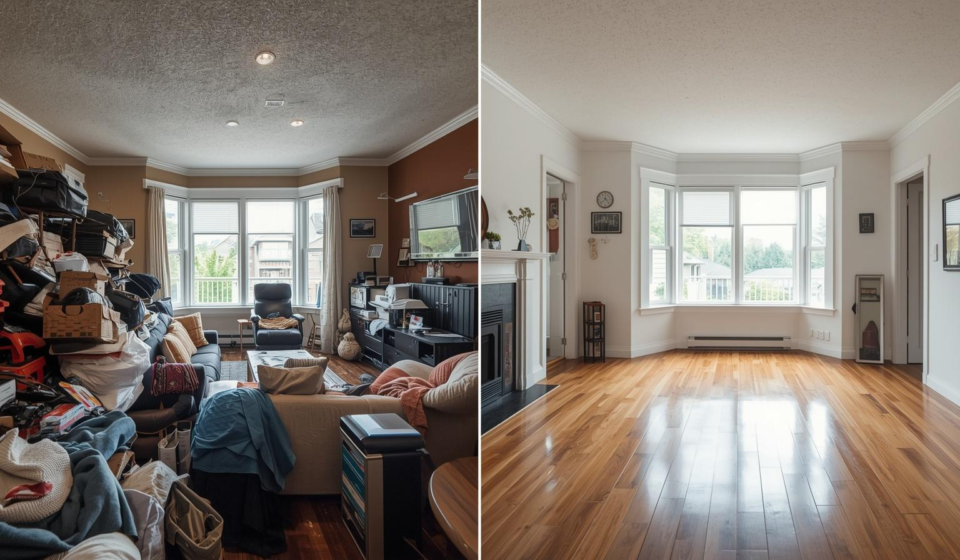
Hoarding Remediation addresses damage and contamination remaining after clearing. Surfaces get deep cleaned. Odours get eliminated. Structural issues get repaired. Contamination gets properly treated.
This is post hoarding restoration bringing property from empty but damaged to truly habitable condition.
Why Properties Need Remediation After Clearing
Years of hoarding create conditions that don’t resolve just by removing items.
Surface Contamination
Accumulated grime on floors, walls, ceilings. Dust and debris ground into surfaces. Staining from spills, leaks, pet waste. Grease buildup in kitchens. Bathroom contamination from sanitation failures.
Standard cleaning doesn’t address contamination embedded in porous surfaces over years.
Biological Residue
Rodent droppings and urine throughout property. Insect remains and feces. Pet waste saturated into flooring. Mold spores from moisture and organic decomposition. Bacteria from biological contamination.
These create health hazards requiring specialized treatment beyond removing visible debris.
Structural Damage
Floor damage from weight, moisture, or waste. Wall damage from pressure, pests, or water. Ceiling damage from roof leaks or second floor issues. Door and window frame deterioration.
Properties can’t be occupied safely until structural integrity gets restored.
Persistent Odours
Ammonia from urine. Decomposition smells from organic matter. Mold and mildew odours. Smoke or chemical smells. Pet odours saturated deep into materials.
These odours don’t disappear when items leave. They require specific treatment eliminating sources and treating affected materials.
Pest Infestation Residue
Even after pest control eliminates living pests, their residue remains. Droppings. Nesting materials. Grease marks from rodent travel paths. Dead insects in walls and crevices.
Property remains unhealthy until this residue gets properly cleaned and treated.
Common Remediation Needs by Severity
Level 1 to 2 Hoarding
Light to moderate contamination. Surface cleaning usually sufficient. Minor repairs to damaged areas. Odour treatment may be needed. Professional deep cleaning recommended but DIY possible for capable families.
Cost typically $800 to $2,500 for professional remediation.
Level 3 Hoarding
Moderate to severe contamination. Professional deep cleaning necessary. Odour treatment required. Some structural repairs likely needed. Pest residue cleanup. Mold treatment in affected areas.
Cost typically $2,500 to $6,000 for professional remediation.
Level 4 Hoarding
Severe contamination throughout property. Professional sanitization essential. Major odour elimination needed. Structural repairs required. Extensive pest residue. Likely mold remediation. Possible floor or subfloor replacement.
Cost typically $6,000 to $15,000 for professional remediation.
Level 5 Hoarding
Extreme contamination requiring specialized treatment. Professional sanitization with industrial equipment. Complete odour elimination process. Major structural repairs or replacement. Extensive mold remediation. Floor replacement likely. Wall and ceiling repairs common.
Cost typically $15,000 to $40,000 for complete remediation.
These ranges assume clearing already completed. Costs cover only restoration work bringing empty property to habitable condition.
Why DIY Remediation Usually Fails
Families attempting restoration work themselves face challenges beyond standard home cleaning.
Health Hazards from Improper Handling
Biological Contamination Exposure
Rodent droppings contain hantavirus, salmonella, and other pathogens. Stirring dried droppings creates airborne particles entering lungs.
Amateur cleaning without proper respiratory protection exposes families to serious illness. Hantavirus can be fatal. Respiratory infections from bacteria require medical treatment.
Mold spores disturbed during cleaning become airborne. Inhaling concentrated spores triggers respiratory problems, allergic reactions, infections.
Families cleaning mold without containment spread contamination through entire property making problem worse.
Chemical Exposure
Cleaning products needed for severe contamination include harsh chemicals. Improper mixing creates dangerous fumes. Inadequate ventilation concentrates toxic vapours.
We’ve seen families hospitalized from chemical exposure during amateur remediation attempts.
Physical Hazards
Damaged flooring and structures create injury risks. Weakened floors can collapse under weight. Compromised stairs or railings fail during use.
Families working on repairs without proper assessment risk serious injury from structural failures.
Inadequate Equipment and Products
Consumer Products Insufficient
Hardware store cleaning products don’t address severe hoarding contamination. Standard cleaners can’t eliminate odours saturated deep into materials. Household mops and scrub brushes can’t reach embedded contamination.
Professional grade products and industrial equipment become necessary for effective remediation.
Missing Specialized Tools
Ozone generators for odour elimination. HEPA air scrubbers for airborne particle removal. Industrial wet/dry vacuums for contaminated liquid removal. Thermal foggers for sanitization. Floor sanders for damaged hardwood restoration.
Families lack access to equipment required for proper remediation work.
Protective Equipment Gaps
Full face respirators with appropriate filters. Tyvek suits preventing skin contact. Multiple glove layers. Disposable boot covers. Eye protection from splashes and airborne particles.
Consumer grade protective equipment doesn’t provide adequate protection for severe contamination work.
Technical Knowledge Requirements
Mold Remediation Complexity
Identifying mold species. Determining if professional mold remediation contractors needed. Containing affected areas. Proper removal techniques. Treating underlying moisture causing growth. Preventing recurrence.
Improper mold handling spreads contamination or allows regrowth after apparent removal.
Odour Elimination Science
Odours require source elimination, not just masking. Understanding what causes different smells. Knowing which treatments work for specific odour types. Recognizing when materials need replacement versus treatment.
Families often spend hundreds on products that temporarily mask smells without addressing sources. Odours return within days or weeks.
Structural Repair Assessment
Determining if damage is cosmetic or structural. Recognizing when professionals need to evaluate safety. Understanding building codes. Knowing what repairs property owners can legally perform versus requiring licensed contractors.
Amateur repairs sometimes hide structural problems creating liability and safety issues.
Time Investment Reality
Professional remediation we complete in 3 to 7 days takes families 3 to 8 weeks attempting DIY.
Deep clean hoarding vancouver bc properties demand sustained intensive effort. Families get exhausted. Work stops partway through. Properties sit in partially remediated state for months.
Incomplete remediation allows mold regrowth, odours to return, or contamination to spread. Starting over costs more than doing it right initially.
Our Complete Hoarding Remediation Process
We developed systematic approaches restoring properties efficiently while addressing all contamination and damage.
Step 1: Post Clearing Property Assessment
After hoarding cleanup completes and items are removed, we assess remediation needs.
Surface Contamination Evaluation
Floor condition throughout property. Wall and ceiling contamination. Fixture and appliance condition. Bathroom and kitchen sanitation levels.
We document severity and extent guiding remediation approach.
Structural Damage Inspection
Floor integrity checking for soft spots, damage, or compromise. Wall damage from pressure, moisture, or pests. Ceiling condition identifying water damage or structural issues. Window and door function.
Serious structural concerns get flagged for licensed contractor evaluation.
Mold and Moisture Assessment
Visible mold growth locations. Hidden mold indicators like musty odours or staining. Moisture sources causing mold. Extent requiring professional mold remediation versus cleaning we can handle.
Extensive mold situations get referred to specialized mold remediation companies before our restoration work begins.
Odour Source Identification
Urine, feces, decomposition, mold, smoke, chemical odours. Which materials absorbed odours. Whether odour sources can be treated or require replacement.
This determines odour elimination approach and costs.
Pest Residue Documentation
Droppings throughout property. Nesting material locations. Grease marks on walls and baseboards. Dead insects in fixtures and corners.
Understanding contamination extent guides cleaning scope.
Step 2: Deep Cleaning and Sanitization
All surfaces get professional treatment eliminating contamination. Our deep clean hoarding vancouver bc approach uses specialized equipment and commercial products addressing severe post hoarding conditions.
Floor Deep Cleaning
Hardwood floors get specialized cleaning removing embedded grime. Damaged hardwood may need sanding and refinishing. Carpet usually requires professional extraction or replacement. Tile and grout get deep cleaned, sealed. Vinyl and linoleum get specialized treatment. Concrete gets degreased and sanitized.
We use commercial grade equipment and products appropriate for contamination level and surface type.
Wall and Ceiling Cleaning
Walls get washed with appropriate cleaners for paint or wallpaper. Severe contamination may require repainting after cleaning. Ceilings get cleaned carefully avoiding damage. Textured surfaces receive special attention as contamination hides in texture.
Some wall conditions require paint sealing or replacement rather than cleaning alone.
Fixture and Surface Sanitization
Kitchen appliances get detailed cleaning inside and out. Bathroom fixtures get sanitized and descaled. Light fixtures and ceiling fans get cleaned. Window treatments evaluated for cleaning versus replacement. Baseboards, door frames, window frames get detailed cleaning.
Every surface gets attention. Contamination hiding in overlooked areas creates ongoing odour and health issues.
Cabinet and Built In Cleaning
Kitchen and bathroom cabinets get emptied, cleaned inside and out. Closet interiors get sanitized. Built in shelving gets detailed cleaning. Drawers get cleaned, deodorized.
Years of accumulated grime in cabinets creates persistent odours and contamination if not addressed.
Step 3: Odour Elimination Treatment
Odours require multi step approach addressing sources and treating affected materials.
Source Removal
Contaminated materials beyond saving get removed. Carpet padding saturated with urine. Drywall with absorbed odours. Insulation contaminated with biological waste. Subflooring damaged by prolonged exposure.
Treating materials that need replacement wastes time and money. We identify what requires removal versus treatment.
Surface Treatment
Sealants for porous surfaces that absorbed odours. Enzymatic cleaners breaking down organic sources. Specialized deodorizers neutralizing chemical smells. Antimicrobial treatments preventing bacterial odour sources.
Different odour types require different treatment products.
Ozone Treatment
Ozone generators eliminate odours absorbed deep into materials. Property gets sealed. Ozone fills spaces penetrating materials. Oxidation breaks down odour molecules.
This industrial process requires property vacancy during treatment. Ozone concentrations used are unsafe for occupancy but extremely effective for odour elimination.
Air Scrubbing
HEPA air scrubbers remove airborne particles. Run continuously during and after cleaning. Create negative air pressure preventing contamination spread. Filter out mold spores, dust, and particles.
Clean air makes property healthier and more pleasant immediately.
Step 4: Structural Repairs and Restoration
Damaged elements get repaired or replaced bringing property to functional condition.
Floor Repairs
Damaged hardwood gets repaired, sanded, refinished. Compromised subflooring gets replaced. Tile regrouping and replacement. Carpet removal and replacement when needed. Vinyl or linoleum replacement in severe damage cases.
Floor integrity affects property safety and value. Proper repairs prevent future problems.
Wall and Ceiling Repairs
Drywall damage gets patched or replaced. Water damaged areas get properly repaired preventing mold recurrence. Holes from fixtures or damage get filled. Textured surfaces get matched and repaired. Painting after repairs brings walls to presentable condition.
We coordinate drywall contractors when extensive replacement needed.
Door and Window Restoration
Damaged doors get repaired or replaced. Window function gets restored. Frames damaged by moisture or pests get replaced. Weather stripping and seals get replaced ensuring energy efficiency.
Functional doors and windows are necessary for occupancy and security.
Plumbing and Fixture Repairs
Toilets, sinks, tubs get repaired or replaced as needed. Leaks get fixed preventing moisture damage. Clogged drains get cleared. Faucets and fixtures get replaced when beyond repair.
We coordinate licensed plumbers when extensive plumbing work required.
Step 5: Final Sanitization and Verification
Property gets final treatment ensuring complete remediation.
Antimicrobial Treatment
Entire property gets treated with professional antimicrobial products. Prevents mold and bacteria regrowth. Creates clean sanitary baseline for new occupancy.
This final step ensures our work creates truly healthy environment.
Air Quality Testing
When situations involved significant mold or contamination, air quality testing verifies safe occupancy levels. Third party testing provides documentation for property sales or insurance.
Most situations don’t require formal testing. Severe contamination cases benefit from verification.
Building Code Compliance
Repairs meet local building codes. Electrical and plumbing work gets properly permitted when required. Property inspection ready for occupancy or sale.
Our work brings properties to legal occupancy standards.
Documentation for Property Owners
Before and after photos showing transformation. Itemized work completed. Disposal documentation for contaminated materials. Air quality test results if performed.
This documentation supports property sales, insurance claims, or legal requirements.
Basement Hoarding Cleanup Vancouver Challenges
Basements present unique hoarding and remediation challenges requiring specialized approaches.
Why Basements Become Hoarding Locations
Out of Sight Storage
Basements naturally accumulate storage overflow. Out of sight means out of mind. Items moved to basement “temporarily” stay for years.
Lower visibility means hoarding severity often exceeds main floor conditions.
Moisture and Environmental Factors
Basements tend toward dampness. Moisture accelerates mold growth and material deterioration. Items stored in basements get water damaged. Organic materials decompose faster in humid environments.
This creates worse contamination than similar hoarding in dry areas.
Access Barriers
Stairs limit who can easily access basements. Reduced traffic means less social pressure maintaining clear spaces. Physical difficulty accessing basements for elderly or mobility limited individuals.
Items get placed in basements never to return because getting them out feels impossible.
Common Basement Contamination Issues
Moisture and Mold
Basement moisture from foundation seepage, poor drainage, or plumbing leaks. Mold grows on stored items, walls, and floor. Black mold common in severely neglected basements. Musty odours from mold and mildew.
Basement hoarding cleanup vancouver must address moisture sources or mold returns after remediation.
Rodent and Pest Issues
Basements provide perfect rodent habitat. Entry through foundation cracks or utility openings. Nesting in stored items and insulation. Droppings throughout basement spaces. Dead rodents in walls or floor cavities.
Our team handles rodent residue cleanup but pest control companies must eliminate living populations before remediation begins.
Sewage and Plumbing Failures
Basement toilets, sinks, floor drains fail creating contamination. Sewage backup from main line blockages. Washing machine or water heater leaks. Sump pump failures flooding basements.
These create significant contamination requiring specialized cleanup beyond standard hoarding remediation.
Concrete Floor Issues
Efflorescence from moisture migration through concrete. Cracks and deterioration. Staining from spills and contamination. Unsealed concrete absorbs urine and organic contamination.
Concrete sealing after deep cleaning prevents odour absorption and future problems.
Our Basement Remediation Approach
Moisture Source Elimination
Identifying and fixing moisture entry points. Improving drainage around foundation. Repairing plumbing leaks. Installing or repairing sump pumps. Dehumidification bringing humidity to appropriate levels.
Basement remediation fails without addressing moisture allowing mold and odours to return.
Mold Remediation
Extent determines if professional mold contractors needed or if our cleaning handles it. Containment preventing spread to upper floors. Proper removal of mold contaminated materials. Treatment of affected surfaces. Air scrubbing removing mold spores.
Basement mold often requires more intensive treatment than main floor mold due to moisture.
Complete Sanitization
Concrete floors get deep cleaned, degreased, sanitized. Walls get treated removing contamination. Ceiling and exposed joists get cleaned. All surfaces receive antimicrobial treatment.
Basements require extra attention due to porous concrete and exposed materials.
Structural Assessment
Floor joists checked for damage from moisture or pests. Foundation walls examined for compromise. Posts and supports verified sound. Any structural concerns flagged for engineering evaluation.
Years of neglect in basements sometimes creates hidden structural issues.
Odour Elimination
Concrete sealing trapping odours in substrate. Ozone treatment penetrating all basement areas. Treatment of walls and ceiling preventing odour retention. Ventilation improvement.
Basement odours prove stubborn requiring aggressive treatment.
Attic Hoarding Cleanup Vancouver Complexities
Attic hoarding creates different challenges than basement or main floor situations.
Why Attics Accumulate Hoarding
Forgotten Storage
Items moved to attic for “temporary” storage stay indefinitely. Difficulty accessing attics means items rarely retrieved. Holiday decorations, old furniture, childhood possessions accumulate over decades.
Some families discover attic hoarding after parent’s death having never seen attic contents.
Seasonal Nature
Attics get accessed once or twice yearly for seasonal items. No regular monitoring means accumulation goes unnoticed. Climate extremes in attics deter frequent visits.
By the time families recognize attic hoarding, severity often surpasses expectations.
Whole House Overflow
When main living areas fill, overflow moves to attic. Attic becomes final frontier for items with nowhere else to go. Multiple generations of accumulated possessions.
Attic hoarding cleanup vancouver often reveals family history through decades of stored items.
Unique Attic Contamination Challenges
Extreme Temperature Impact
Summer attic temperatures exceed 50 degrees Celsius in Vancouver. Winter temperatures drop below freezing. Temperature cycling deteriorates stored items. Organic materials decompose faster. Plastics and fabrics degrade.
Items stored in attics often reach beyond salvaging due to environmental damage.
Insulation Contamination
Rodents nest in attic insulation. Droppings and urine saturate insulation. Insulation loses effectiveness when compressed by stored items. Contaminated insulation requires removal and replacement.
Insulation replacement substantially increases attic remediation costs.
Roof Leak Damage
Minor roof leaks go unnoticed in hoarded attics. Water damage to stored items and structure. Mold growth from persistent moisture. Wood rot in rafters, joists, and decking.
Hoarding hides roof problems allowing damage to worsen over years.
Limited Access and Working Conditions
Narrow attic access making large item removal difficult. Low ceiling height limiting worker movement. Extreme temperatures during remediation work. Poor ventilation concentrating dust and contaminants.
Attic work proceeds slower than main floor remediation due to access limitations.
Structural Load Concerns
Accumulated weight exceeds attic floor load capacity. Ceiling joists not designed for heavy storage loads. Risk of ceiling collapse into rooms below. Careful weight distribution during clearing prevents structural failure.
We assess structural safety before beginning attic hoarding cleanup.
Our Attic Remediation Process
Safe Item Removal
Systematic clearing preventing structural stress. Weight distributed safely during removal process. Workers use proper safety equipment for height and temperature. Items moved carefully through access preventing damage to property.
Attic clearing requires extra safety precautions due to working conditions.
Insulation Evaluation and Replacement
Contaminated insulation gets removed properly. Disposal follows regulations for contaminated materials. New insulation installed after cleaning and repairs. Proper insulation levels restore energy efficiency.
Many attic remediations include complete insulation replacement due to contamination.
Structural and Roof Inspection
Rafters and joists checked for damage. Roof decking examined for rot or compromise. Ventilation adequacy assessed. Any structural concerns referred to appropriate contractors.
Hoarding sometimes reveals serious roof or structural issues requiring immediate attention.
Thorough Sanitization
All wood surfaces get cleaned and treated. Ventilation areas get cleared and cleaned. Antimicrobial treatment throughout attic space. Odour elimination addresses deteriorated materials and biological contamination.
Attic spaces require complete treatment preventing odours migrating to living areas through ceiling.
Ventilation Improvement
Ensuring adequate attic ventilation. Clearing blocked vents. Installing additional ventilation if needed. Proper ventilation prevents moisture and heat buildup.
Good ventilation protects property and prevents future problems.
Backyard Hoarding Cleanup Vancouver Situations
Outdoor hoarding creates different challenges than interior situations but still requires professional remediation.
Common Backyard Hoarding Patterns
Vehicle and Equipment Accumulation
Non functional vehicles. Broken lawnmowers and equipment. Automotive parts and tires. Construction materials never used. Scrap metal collections.
Backyard hoarding cleanup vancouver often involves heavy item removal requiring equipment.
Building Materials and Debris
Lumber stockpiles deteriorating outdoors. Concrete, bricks, blocks scattered across property. Roofing materials from past projects. Fencing materials never installed. Pallets and construction waste.
These create eyesores and potential hazards.
Yard Waste and Organic Accumulation
Branches and yard waste piles. Compost situations gone wrong. Dead plants and pots. Soil and mulch piles. Garden debris from years.
Organic hoarding attracts pests and creates odours affecting neighbours.
Recreational and Household Items
Old furniture stored outside. Appliances left to deteriorate. Children’s toys and equipment outgrown. Recreational items never used. General household overflow.
Weather destroys value of items that might have been salvageable indoors.
Outdoor Contamination and Hazard Issues
Pest Harbourage
Rats and mice nest in outdoor accumulations. Raccoons shelter in debris piles. Insects breed in standing water and organic matter. Outdoor hoarding creates perfect pest habitat.
Pest populations affect entire neighbourhood, not just hoarded property.
Soil Contamination
Automotive fluids leaking into soil. Chemical containers deteriorating and releasing contents. Battery acid and corrosives. Lead paint from deteriorating items. Heavy metals from various sources.
Soil remediation sometimes required for severe contamination.
Standing Water and Breeding
Items create mosquito breeding areas. Stagnant water in containers and depressions. Disease vector concerns. Odour problems affecting neighbours.
Vector control may require involvement before clearing proceeds.
Neighbour Impact
Visible blight affecting property values. Odours crossing property lines. Pest migrations to neighbouring properties. Concerns about fire hazards. Property standard violations.
Backyard hoarding often involves municipal bylaw enforcement or neighbour complaints.
Our Backyard Remediation Services
Heavy Item Removal
Equipment for lifting and removing vehicles. Proper disposal of scrap metal and materials. Recycling of salvageable materials. Coordination with auto recyclers for vehicles. Safe handling of heavy items.
Outdoor cleanup often requires specialized equipment we bring to projects.
Organic Waste Removal
Clearing overgrown vegetation. Removing accumulated yard waste. Proper composting or disposal. Treatment of organic contamination in soil. Restoration of yard to functional state.
Properties often need landscaping after backyard hoarding cleanup.
Hazardous Material Handling
Proper disposal of automotive fluids. Battery recycling. Paint and chemical disposal. Safe removal of contaminated soil when required. Following environmental regulations.
We handle hazardous materials properly preventing environmental violations.
Property Restoration
Leveling ground disturbed by accumulation. Removing damaged fencing or structures. Preparing yard for landscaping or sale. Coordination with landscaping contractors when needed.
Backyard remediation brings outdoor spaces to usable condition.
Neighbour Consideration
Discrete work minimizing neighbour awareness when possible. Addressing odour and pest concerns quickly. Maintaining clean worksite. Professional appearance throughout project.
Good neighbour relations matter during outdoor remediation projects.
Complete Remediation Cost Expectations
Understanding full restoration costs helps families budget appropriately beyond initial clearing expenses.
Remediation Cost Factors
Severity of Contamination
Light contamination requires basic deep cleaning. Moderate contamination needs professional sanitization. Severe contamination demands specialized treatment and material replacement. Extreme contamination may require complete gut and rebuild.
Contamination level drives costs more than property size.
Extent of Structural Damage
Cosmetic damage repairs relatively affordable. Functional damage requiring fixture or component replacement costs more. Structural integrity issues require licensed contractors and engineering. Major structural compromise demands significant investment.
Damage beyond surface issues escalates costs quickly.
Material Replacement Needs
Flooring replacement. Drywall replacement. Insulation replacement. Contaminated materials beyond treatment require removal and replacement.
Projects requiring significant material replacement double or triple remediation costs compared to cleaning only situations.
Area Specific Challenges
Basement moisture issues adding cost. Attic insulation replacement needs. Outdoor contamination extent. Multiple area involvement versus single space.
Each area adds complexity and cost to overall remediation.
Typical Remediation Cost Ranges
Basic Remediation: $800 to $2,500
Deep cleaning throughout property. Surface treatment and sanitization. Minor odour elimination. Small repairs to fixtures or surfaces. Suitable for Level 1 to 2 hoarding post clearing.
Moderate Remediation: $2,500 to $6,000
Professional sanitization with commercial equipment. Odour elimination treatment. Some flooring repair or replacement. Wall and ceiling repairs. Suitable for Level 3 hoarding post clearing.
Extensive Remediation: $6,000 to $15,000
Complete sanitization with specialized treatment. Major odour elimination including ozone. Significant flooring replacement. Substantial repairs throughout property. May include insulation replacement. Suitable for Level 4 hoarding post clearing.
Complete Restoration: $15,000 to $40,000 plus
Industrial sanitization and decontamination. Complete odour elimination process. Major flooring replacement throughout. Extensive wall and ceiling repairs or replacement. Insulation removal and replacement. Major structural repairs. Suitable for Level 5 hoarding post clearing.
These ranges assume clearing already completed. Costs cover restoration work only.
Some extreme cases require costs exceeding $40,000 when structural damage is severe or contamination demands gut renovation.
Combined Clearing and Remediation Costs
Many families benefit from understanding total project costs including both clearing and remediation.
Level 2 Hoarding Total
Clearing costs: $1,400 to $3,600
Remediation costs: $800 to $2,500
Total: $2,200 to $6,100
Level 3 Hoarding Total
Clearing costs: $3,200 to $7,500
Remediation costs: $2,500 to $6,000
Total: $5,700 to $13,500
Level 4 Hoarding Total
Clearing costs: $7,500 to $16,000
Remediation costs: $6,000 to $15,000
Total: $13,500 to $31,000
Level 5 Hoarding Total
Clearing costs: $16,000 to $35,000
Remediation costs: $15,000 to $40,000 plus
Total: $31,000 to $75,000 plus
Understanding complete costs prevents budget surprises when families learn clearing alone doesn’t restore property to occupancy.
Complete pricing details for clearing available in our hoarding cleanup cost guide.
Coordinating Remediation with Other Professionals
Complete property restoration often requires multiple specialists working together.
Mold Remediation Specialists
When mold extent exceeds our cleaning scope, specialized mold remediation contractors become necessary. They handle severe mold situations with industrial containment and removal. We coordinate timing ensuring our work and theirs sequence properly. Air quality testing verifies successful remediation.
Licensed Contractors for Major Repairs
Electrical work requires licensed electricians. Extensive plumbing needs licensed plumbers. Major structural repairs need general contractors or structural engineers. Roofing work requires roofing contractors.
We identify needs and coordinate appropriate professionals ensuring code compliance.
Pest Control Services
Active pest infestations require professional pest control before remediation begins. Our cleaning addresses pest residue after populations get eliminated. Coordination ensures timing works efficiently.
Property Restoration Companies
Fire or water damage from hoarding situations sometimes requires insurance restoration companies. We work alongside these teams when insurance covers portions of work. Coordination prevents duplicated effort or gaps.
Frequently Asked Questions About Hoarding Remediation
What’s the difference between hoarding cleanup and remediation?
Hoarding cleanup removes accumulated possessions from property. Items get sorted into keep, donate, recycle, dispose categories. Physical volume clears. Space becomes accessible again.
Hoarding cleanup vancouver services handle this initial clearing bringing property from filled to empty.
Hoarding remediation addresses damage and contamination remaining after items leave. Deep cleaning surfaces. Eliminating odours. Sanitizing contaminated areas. Repairing structural damage. Treating mold. Removing pest residue.
Remediation brings property from empty but damaged to truly habitable and healthy condition.
Most hoarding situations need both services. Clearing alone leaves properties unsuitable for occupancy. Families sometimes assume clearing completes the work, then discover extensive remediation needs afterward.
Understanding both requirements from start helps families budget appropriately and plan timeline realistically.
How long does hoarding remediation take after clearing?
Timeline depends on contamination severity, property size, and whether structural repairs are needed.
Light remediation for Level 1 to 2 post hoarding takes 2 to 4 days typically. Deep cleaning, sanitization, minor repairs complete quickly.
Moderate remediation for Level 3 post hoarding takes 4 to 8 days. Professional sanitization, odour treatment, flooring repairs require more time.
Extensive remediation for Level 4 post hoarding takes 1 to 3 weeks. Major contamination treatment, significant repairs, insulation replacement extend timeline.
Complete restoration for Level 5 post hoarding takes 3 to 8 weeks. Structural repairs, gut work, major replacements demand extended timeline.
Compare to clearing timeline which runs 1 day to 4 weeks depending on severity. Total project from start of clearing through completed remediation ranges from 1 week to 3 months for most situations.
Rush situations for building inspection compliance or property sale deadlines get priority scheduling when possible.
Can I live in the property during remediation?
Living in property during remediation depends on work scope and contamination level.
Light remediation might allow occupancy with work areas sectioned off. Family stays in unaffected areas while rooms get cleaned sequentially.
Moderate to severe remediation usually requires vacancy. Chemical treatments used. Ozone generators create unsafe air during treatment. Dust and particles during work create unhealthy conditions. Construction noise and disruption make occupancy impractical.
Our recommendation for Level 3 and above is temporary relocation during remediation. Family finds alternate accommodation. Work proceeds faster without occupants. Health risks eliminated.
Some families can’t afford temporary housing. We work with them creating phased approach. Complete one section allowing occupancy. Move to next section. This extends timeline but provides more affordable option.
Biohazard level contamination absolutely requires vacancy. No safe way to occupy property during intensive decontamination work.
Does insurance cover hoarding remediation costs?
Standard homeowners insurance rarely covers hoarding cleanup or remediation directly. Gradual accumulation over time is excluded from most policies.
However, insurance sometimes covers damage caused by hoarding rather than hoarding itself. Water damage from plumbing failures might be covered even if hoarding contributed to problem. Mold remediation may be covered if tied to sudden water event rather than gradual neglect. Structural repairs from covered perils might apply.
Worth contacting insurance company explaining situation. They evaluate coverage based on specific policy language and circumstances.
We provide detailed itemized invoices separating different work categories. This helps families submit claims showing what work addresses covered versus excluded issues.
Some families successfully claim portions of remediation costs even when full coverage doesn’t apply.
Rental property owners sometimes have different coverage. Landlord policies may cover tenant caused damage including hoarding situations. Check specific policy terms.
What happens if mold is discovered during remediation?
Mold discovery during remediation is common. Years of hoarding create moisture problems allowing mold growth.
Surface mold we can address through our deep cleaning and sanitization process. Antimicrobial treatments prevent regrowth. Air scrubbing removes mold spores.
Extensive mold growth requires professional mold remediation contractors. We identify situations exceeding our scope. Refer families to licensed mold specialists. Coordinate our work timing with their remediation.
Hidden mold behind walls or in cavities sometimes appears when we begin work. We inform families immediately. Provide options for addressing discovery. Adjust project scope and costs accordingly.
Mold remediation costs are separate from our hoarding remediation pricing. Can range from $2,000 to $15,000 depending on extent and location.
Some situations require stopping our work while mold remediation completes. Others allow us to continue in unaffected areas. We plan approach minimizing delays and costs.
Mold makes properties unsafe for occupancy. Must be addressed before property becomes habitable regardless of costs. Ignoring mold creates serious health risks and property damage.
Can remediation be done in stages to spread costs?
Yes. Staged remediation helps families manage costs over time.
Phase 1: Critical Safety Issues
Address severe contamination and structural hazards. Eliminate immediate health risks. Make property minimally safe even if not fully restored.
Cost covers emergency needs allowing rest of work to proceed on timeline family can afford.
Phase 2: Primary Living Areas
Remediate main floor living spaces. Kitchen and bathroom full functionality. Primary bedroom habitability. Living room restoration.
This creates livable core of property while leaving less critical areas for later.
Phase 3: Secondary Spaces
Bedrooms, additional bathrooms, finished basement get addressed. Property becomes fully functional for family use.
Phase 4: Storage and Utility Areas
Unfinished basement, attic, garage get final remediation. Property reaches complete restoration.
Staging works when property doesn’t need immediate sale and family can tolerate gradual completion.
Disadvantage is mobilization costs. Setting up equipment and returning multiple times costs more than single continuous project.
For family hoarding situations where relationships and emotions require slower pace, staged approach often makes sense even with cost premium.
What makes basement remediation more expensive?
Basement hoarding cleanup vancouver costs more than main floor remediation due to moisture, access, and contamination factors.
Moisture is constant basement challenge. Foundation seepage. Poor drainage. Plumbing leaks. Concrete naturally transmits moisture. This creates mold growth exceeding main floor issues. Requires moisture source elimination before effective remediation. May need waterproofing or drainage work adding costs.
Concrete floors absorb contamination. Urine, organic waste, chemicals penetrate porous concrete. Requires intensive treatment and sealing. Sometimes concrete replacement is only effective solution.
Access limitations slow work. Items must be carried up stairs. Equipment moved through narrow passages. Work space cramped. These inefficiencies increase labour hours.
Structural concerns are common. Years of moisture and weight damage floor joists. Foundation walls crack or deteriorate. Posts and supports corrode or rot. Repairs require licensed contractors. Costs escalate quickly.
Mold in basements tends toward worst species. Toxic black mold common in severely neglected basements. Requires specialized remediation. Air quality testing needed. Treatment costs exceed surface mold.
Pest populations thrive in basements. More droppings and nesting. Larger rodent populations. More intensive cleanup needed. May require insulation removal if contaminated.
Typical basement remediation runs 40% to 60% higher than comparable main floor work.
How do you eliminate odours that won’t go away?
Persistent odours require systematic approach addressing sources and treating absorbed materials.
Source Identification and Removal
Finding where odours originate. Contaminated carpet padding. Urine soaked subflooring. Decomposed materials in walls. Contaminated insulation. These sources must be removed, not just treated.
Trying to treat materials beyond saving wastes money without solving odour problems.
Surface Treatment
Enzymatic cleaners breaking down organic odours. Sealants preventing odours from escaping porous materials. Specialized products for chemical or smoke odours. Multiple applications building effectiveness over time.
Different odour types require different product families.
Ozone Generation
Industrial ozone generators create concentrated ozone filling property. Ozone molecules bond with odour molecules breaking them down. Penetrates materials cleaning can’t reach. Requires 24 to 72 hours treatment time. Property must be vacant during treatment.
Most effective odour elimination method for absorbed smells.
Air Scrubbing
HEPA air scrubbers running continuously during and after work. Remove airborne particles carrying odours. Create clean air baseline. Prevent cross contamination during remediation.
Material Replacement When Necessary
Some materials can’t be saved. Carpet completely saturated with urine. Drywall with years of absorbed odours. Subflooring with decomposition contamination. Insulation with biological contamination.
Replacing these costs more initially but creates permanent odour elimination. Treating materials beyond saving provides temporary improvement but odours return.
Our assessment determines what gets treated versus replaced. Honest recommendations save families money long term even if initial costs seem higher.
What certifications should remediation companies have?
Hoarding remediation doesn’t have specific licensing requirements in BC. However, quality companies demonstrate certain credentials and capabilities.
WorkSafeBC coverage protecting their workers. We’re insured through WCB. Prevents property owner liability if worker injury occurs. Reputable companies prioritize worker safety.
Business liability insurance protecting property during work. Covers accidental damage. Shows professional operation. We carry full liability coverage.
Better Business Bureau standing. BBB certification shows commitment to resolving customer concerns. We’re BBB certified maintaining good standing.
Experience specifically with hoarding situations. General cleaning companies lack hoarding remediation expertise. Ask how many hoarding projects completed. Years working in field. We’ve completed hundreds of hoarding remediations across 14 plus years.
IICRC certification for water damage, mold remediation, or odour control shows professional training. Not all hoarding work requires IICRC but certifications demonstrate commitment to proper methods.
References from past hoarding clients. Successful projects. Satisfied families. We provide references when requested.
Proper equipment demonstrating capability. Ozone generators. Air scrubbers. Industrial cleaning equipment. Companies with right tools complete work properly.
Realistic quotes based on property assessment. Suspiciously low quotes indicate inexperience or corner cutting. Realistic pricing reflects proper work scope.
Can I do some remediation work myself to save money?
Some remediation work is DIY appropriate for capable families. Other work absolutely requires professionals.
Safe for DIY:
Light surface cleaning if comfortable with task. Painting after professional cleaning and repairs. Installing new fixtures after professional sanitization. Basic organization and arrangement.
These tasks save money when family has time and capability.
Risky for DIY:
Deep cleaning contaminated surfaces without proper equipment. Working in mold affected areas without containment. Handling biological contamination without protection. Odour elimination without understanding source treatment.
Health risks and ineffective results make these poor DIY candidates.
Never DIY:
Structural repairs affecting building safety. Electrical or plumbing work requiring licensing. Mold remediation in extensive situations. Ozone treatment without proper equipment and knowledge. Work in attics or crawlspaces with severe contamination.
These create serious hazards or legal compliance issues. Must be professional.
If families want to participate saving costs, we recommend handling post remediation tasks. Painting. Installing new items. Furnishing. Arrangement. Avoid remediation itself but take on finishing touches.
Take Action for Complete Property Restoration
Property cleared of hoarding items needs professional remediation becoming truly habitable again.
Contact Us for Remediation Assessment
Call or text 778-770-5442. Discuss your post clearing remediation needs. Explain contamination concerns, damage observed, timeline requirements.
Email info@cluttertocash.com with property details. Clearing already completed or scheduled. Remediation scope questions.
What Happens Next
Free on site assessment of remediation needs. We evaluate contamination severity. Assess structural damage. Identify odour sources. Determine mold extent.
Written estimate detailing all remediation work recommended. Itemized costs for each component. Timeline for completion.
Coordination with other contractors if needed. Mold remediation specialists. Licensed repair contractors. We handle coordination streamlining project.
Work scheduled at your convenience. Respect for property and timeline. Professional systematic restoration.
Complete property transformation. From post hoarding damage to clean habitable condition. Ready for occupancy or sale.
Our Remediation Commitment
Professional deep cleaning with commercial equipment. Proper contamination treatment protecting health. Odour elimination addressing sources not just symptoms. Structural repairs meeting building codes. Coordination with specialized contractors when needed.
Serving All Metro Vancouver
Same quality remediation everywhere we work. Vancouver, North Vancouver, West Vancouver, Burnaby, Surrey, Richmond, Coquitlam, New Westminster, Delta, Langley, Maple Ridge.
All property types. Houses, condos, apartments. Basements, attics, main floors, backyards.
Stop Living with Post Hoarding Damage
Call 778-770-5442. Professional remediation bringing property to habitable condition. Free assessment. Realistic timelines. Honest costs.
Complete property restoration from experienced team.
Clutter to Cash Vancouver
Complete Hoarding Remediation & Restoration Services
Phone: 778-770-5442
Email: info@cluttertocash.com
Licensed and Insured, WCB Coverage, BBB Certified
Hoarding Services
Hoarding Cleanup Vancouver | Downtown Hoarding Cleanup | Hoarding Cleanup Cost | Family Hoarding Support | Hoarding Services | Extreme Hoarding | Family Support | Post Hoarding Restoration | Biohazard Cleaning
Estate Services
Estate Cleanout | Estate Value Recovery | Estate Liquidator | Estate Sales | Online Estate Auctions | Estate Appraisals | Probate Executor Services | Senior Transitions | Estate Donation Coordination
Junk Removal Services
Junk Removal | Furniture Removal | Debris Removal | Couch Removal | Appliance Removal | Mattress Removal
Consignment Services
Consignment Shop | Furniture Consignment | Estate Consignment
Property Services
Property Cleanout | House Clearance | Property Manager Services | Downsizing Services | Foreclosure Cleanouts
We acknowledge that our operations are conducted on the traditional, ancestral, and unceded territory of the Coast Salish peoples, including the territories of the xʷməθkwəy̓əm (Musqueam), Skwxwú7mesh (Squamish), and Səl̓ílwətaʔ/Selilwitulh (Tsleil Waututh) Nations.