Eco Friendly Furniture Disposal and Recycling Vancouver: The Complete Environmental Guide
Metro Vancouver sends over 17,000 tonnes of furniture to landfills every year. Most of this waste could be prevented. Quality furniture could extend useful life through consignment and donation. Damaged items could be recycled into valuable materials. Instead, perfectly salvageable sofas, tables, and beds pile up in landfills releasing greenhouse gases for centuries.
Traditional junk removal companies profit from this waste. They charge $200 to $500, throw everything in landfills, and move to next customer. Fast disposal beats environmental responsibility in their business model.
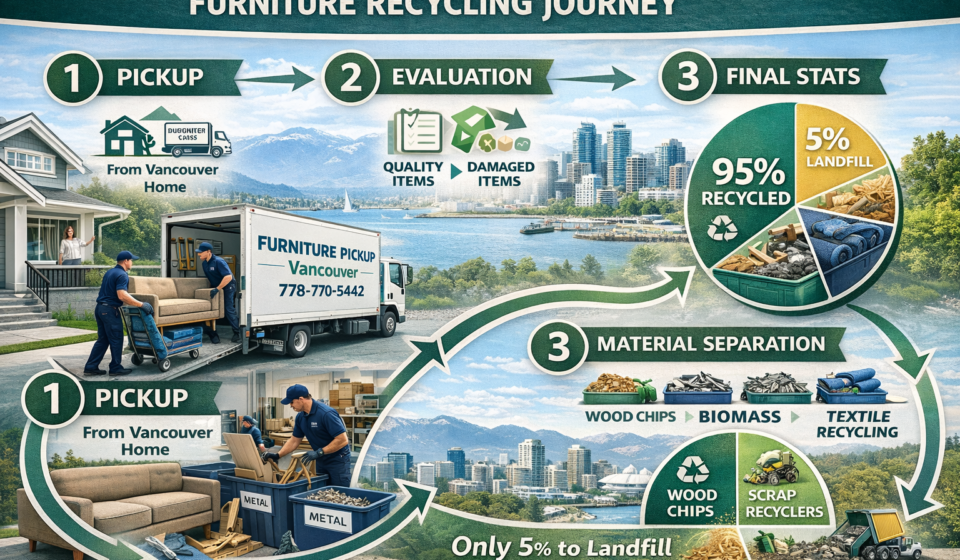
Our eco friendly furniture disposal vancouver system achieves 95% landfill diversion rate through professional evaluation, strategic consignment, coordinated donation, and certified recycling partnerships. Items get second lives helping families or become raw materials for new products instead of rotting in dumps.
Plus this environmental approach generates better financial outcomes than wasteful disposal. Consignment proceeds and donation tax benefits typically exceed service costs while keeping furniture from landfills.
This guide explains Vancouver’s furniture waste crisis, how authentic eco-friendly disposal works, why greenwashing claims mislead consumers, and how sustainable furniture removal delivers environmental AND financial benefits simultaneously.
Why Traditional Furniture Disposal Damages Environment
Research on municipal waste shows furniture comprises significant portion of landfill volume with devastating long term environmental consequences.
Metro Vancouver’s Furniture Waste Crisis
Annual Landfill Statistics:
Over 17,000 tonnes of furniture disposed annually across Metro Vancouver. Average piece takes 300 to 500 years decomposing in landfill conditions. Some synthetic materials never fully decompose.
What Happens in Landfills:
Furniture doesn’t simply disappear. Buried under tons of other waste, items break down slowly releasing harmful substances.
Wood Furniture Decomposition:
Treated wood contains chemicals (preservatives, stains, finishes) that leach into groundwater over decades. Natural wood biodegrades anaerobically producing methane, greenhouse gas 25 times more potent than carbon dioxide.
Wasted resource that could become useful products. Quality hardwood could serve families for generations. Damaged wood could be recycled into landscaping mulch used throughout Vancouver parks or converted to biomass energy.
Upholstered Furniture Problems:
Foam Cushions: Polyurethane foam essentially permanent in landfills. Takes 500+ years for any decomposition. Breaks into smaller pieces becoming microplastic pollution in soil.
Synthetic Fabrics: Polyester, nylon, acrylic fabrics release microplastic fibers as they slowly degrade. These microscopic plastics contaminate groundwater and eventually reach ocean ecosystems.
Flame Retardant Chemicals: Furniture manufactured before 2013 often contains toxic flame retardants now banned. These chemicals leach from landfilled furniture into surrounding environment.
Metal Components Wasted:
Furniture contains significant recyclable metal. Steel frames, springs, hardware, aluminum parts. All recyclable with massive environmental benefits.
Metal Recycling Environmental Impact:
Recycling steel saves 60% energy compared to producing new steel from iron ore. Aluminum recycling saves 95% energy versus mining and refining new aluminum.
Every metal furniture frame landfilled wastes energy equivalent that could power Vancouver home for days.
The Cheap Disposal Business Model
Most junk removal companies operate on speed over sustainability. Their profit comes from completing maximum jobs daily, not environmental responsibility.
Typical Process:
Load everything into truck as fast as possible. Drive to nearest landfill. Dump entire load. Charge customer $300 to $500. Move to next job.
Zero sorting. Zero donation coordination. Zero recycling effort. 100% landfill.
Why This Persists:
Landfill disposal is fastest and cheapest for companies. Sorting items requires time and expertise. Coordinating donations needs established charity relationships. Recycling requires facility partnerships and material separation.
Environmental shortcuts maximize company profit while shifting costs to environment and community.
Real Example:
Vancouver junk removal company processing 1,000 items monthly:
- 12,000 furniture pieces annual throughput
- 180 tonnes yearly landfill contribution
- Zero consignment, zero donation, zero recycling
- Pure profit from volume and speed
This business model directly contradicts Vancouver’s zero waste goals and environmental commitments.
Environmental Costs Nobody Calculates
Greenhouse Gas Emissions:
Furniture decomposition in landfills produces methane captured only partially by landfill gas systems. Significant methane escapes contributing to climate change.
Furniture manufacturing to replace landfilled items generates additional emissions. Wood harvesting, metal mining, synthetic material production, transportation, all create carbon footprint.
Resource Depletion:
Landfilling furniture wastes finite resources. Hardwood forests. Metal ores. Petroleum for synthetics. These materials could be reused or recycled instead.
Landfill Space Consumption:
Metro Vancouver landfill capacity is limited and expensive. Every cubic meter consumed by furniture could be avoided through sustainable furniture disposal vancouver practices.
Toxic Contamination:
Chemicals from furniture finishes, adhesives, flame retardants accumulate in landfill leachate. This contaminated liquid requires treatment preventing groundwater pollution.
Environmental damage from furniture disposal extends decades beyond the moment items enter landfill.
Our 95% Landfill Diversion System
We built our green junk removal vancouver service around environmental outcomes, not just convenient disposal.
Step 1: Professional Environmental Evaluation
Every item receives professional assessment during furniture pickup vancouver determining optimal environmental outcome.
Three Category System:
Category 1: Quality Furniture for Extended Life
Items with remaining useful life go through our furniture consignment vancouver network. This is ultimate sustainability because one quality sofa used for 20 more years prevents manufacturing new furniture with all associated environmental costs.
Environmental Impact of Furniture Reuse:
Manufacturing new sofa requires:
- Hardwood harvesting (deforestation)
- Metal mining and processing (energy intensive)
- Synthetic material production from petroleum
- Chemical treatments and finishes
- Transportation across global supply chains
- Packaging materials
Extending existing furniture life eliminates 100% of these environmental costs.
What Goes to Consignment:
Quality brands in good condition, mid-century and vintage pieces, solid wood furniture, designer items, well maintained upholstered pieces. Items that will sell and serve new owners for years.
Category 2: Functional Furniture for Community Reuse
Standard household furniture without strong resale market goes to Vancouver donation partners serving families in need.
Social AND Environmental Benefits:
Families receive needed furniture they couldn’t afford new. Items get reused preventing landfill waste. Manufacturing demand decreases slightly reducing overall environmental footprint.
Strategic Donation Matching:
We route furniture to charities that will actually use items in their programs or distribute to families. Not organizations that immediately resell to liquidators or dump unsellable donations.
What Goes to Donation:
Functional everyday furniture, standard household items, basic bedroom sets, dining tables and chairs, basic office furniture, children’s furniture still safe and sturdy.
Category 3: Damaged Items for Material Recovery
Furniture too damaged for reuse gets professionally recycled. Materials separated and processed into valuable raw materials.
Environmental Advantage Over Landfill:
Recycling recovers materials preventing both landfill waste and need to extract virgin resources. Wood becomes mulch or biomass energy. Metal gets melted for new products. Some textiles convert to industrial applications.
What Goes to Recycling:
Broken furniture with salvageable materials, damaged wood pieces, metal frames from worn out items, mattresses requiring certified recycling, items with separated recyclable components.
Step 2: Material Separation and Certified Recycling
Items unsuitable for consignment or donation get professionally recycled through our certified facility partnerships.
Wood Material Recycling:
Clean Natural Wood: Untreated hardwood and softwood gets processed into landscaping mulch distributed throughout Metro Vancouver parks, gardens, and green spaces. Your old dining table might become protective mulch around Vancouver street trees.
Treated and Finished Wood: Wood with stains, paints, or chemical treatments goes to biomass energy facilities generating electricity. Controlled combustion with pollution controls is environmentally superior to landfill decomposition producing uncontrolled methane.
Engineered Wood Products: Chipboard, MDF, plywood gets recycled into new composite materials. Processed into fibers and rebonded with adhesives creating recycled content building materials.
Metal Component Recycling:
Steel Frames and Hardware: Delivered to scrap metal processors where steel gets melted and reformed into new steel products. Recycling steel reduces energy consumption 60% versus producing steel from iron ore.
Aluminum Parts: Aluminum recycling saves 95% energy compared to refining new aluminum from bauxite ore. Every aluminum furniture component recycled prevents significant carbon emissions.
Brass and Specialty Metals: Hardware and decorative elements go to specialty metal recyclers maintaining material purity for highest value applications.
Upholstery and Fabric Processing:
Natural Fabrics: Cotton, wool, linen upholstery directed to textile recycling programs. Natural fibers can be reprocessed into industrial textiles, insulation materials, or reclaimed fabric content.
Synthetic Materials: Polyester and nylon fabrics present recycling challenges. We work with facilities attempting synthetic textile recycling where possible. Remaining synthetics disposed at certified facilities with proper documentation.
Foam Components: Polyurethane foam from cushions can be recycled into carpet underlay in some cases. Technology for foam recycling continues improving. We partner with facilities offering best available foam processing.
Mattress Certified Recycling:
Our $40 per unit mattress surcharge covers certified recycling processing required by BC regulations.
Mattress Breakdown Process:
Steel Springs Extraction: Innerspring mattresses contain 15 to 25 lbs recyclable steel. Springs removed and sent to scrap metal recycling.
Foam Processing: Mattress foam processed into carpet padding when possible. Alternative uses include protective packaging materials and industrial applications.
Fabric Cover Recycling: Mattress ticking sent to textile recyclers. Natural fiber content can be reclaimed.
Wood Frame Recovery: Box spring wood frames recycled through wood processing channels or biomass energy.
Environmental Impact: Each mattress diverted from landfill saves approximately 23 cubic feet landfill space plus prevents 20 to 30 lbs materials entering waste stream.
Step 3: Transparent Landfill Diversion Tracking
After consignment evaluation, donation coordination, and material recycling, typically only 5% of items lack any reuse or recovery option.
What Actually Goes to Landfill:
Severely contaminated items unsafe for donation, broken furniture with no recyclable material value, items containing hazardous substances requiring special disposal, composite materials without recycling technology available.
Even these items go to proper Metro Vancouver facilities with complete documentation. Never illegal dumping or unapproved disposal sites.
Our 2024 Environmental Results:
Total items processed: 2,847 pieces Items diverted through consignment: 892 pieces (31%) Items donated to charities: 1,478 pieces (52%) Items professionally recycled: 335 pieces (12%) Items to landfill: 142 pieces (5%)
Landfill diversion rate: 95%
Industry Comparison:
Traditional junk removal: 70% to 80% landfill rate Our eco friendly furniture disposal vancouver: 5% landfill rate
We achieve 15 times better environmental performance than industry standard.
Environmental Certifications and Partnerships
Licensed Operations:
Registered with Metro Vancouver for commercial waste handling. Compliance with BC environmental regulations. Proper documentation for all waste streams.
Certified Recycling Facility Partnerships:
We work exclusively with licensed recycling facilities meeting environmental standards. Wood processors, metal recyclers, textile facilities all properly certified.
Charity Partnership Network:
Established relationships with Vancouver charitable organizations accepting furniture donations. Items matched to charities that will use them, not dump them.
Transparent Reporting:
Quarterly environmental impact reporting tracking diversion rates, material recovery, and landfill reduction. Public accountability for our environmental claims.
This is authentic environmental service, not greenwashing marketing.
Financial AND Environmental Benefits Combined
Sustainable choice delivers better financial outcomes than wasteful disposal. Environmental responsibility generates value instead of costs.
The Complete Value Calculation
Traditional Junk Removal Approach:
Customer pays: $450 service fee Company landfills: 100% of items Customer receives back: $0 Environmental impact: Complete waste Total customer cost: $450 spent
Our Eco-Friendly System:
Customer pays: $230 service fee Quality items to consignment: Sell for $1,200, customer receives $600 (50%) Standard items donated: $800 fair market value, $344 tax benefit at 43% rate Damaged items recycled: Environmental benefit Only 5% to landfill: Minimal waste
Customer financial outcome: Service cost: $230 Consignment proceeds: $600 Donation tax benefit: $344 Net value: $714 financial benefit
Environmental outcome: 95% diverted from landfill
Customer makes $714 while protecting environment.
Real Vancouver Example
Burnaby resident clearing furniture from downsizing:
Items: Sofa, dining set, bedroom furniture, office desk, outdoor patio set
Traditional Cheap Removal: Quote: $485 Process: Everything landfilled Environmental impact: 100% waste (estimated 850 lbs landfill) Financial return: $0 Total cost to customer: $485
Our Eco Friendly Furniture Disposal: Service: $287.50 (2.5 hours, 2 workers)
Environmental processing:
- Sofa and dining set: Consignment quality, sold for $1,400 total, customer received $700
- Bedroom furniture: Donated to family charity, $600 fair market value
- Office desk: Recycled (damaged), materials recovered
- Patio set: Donated to community program, $180 fair market value
Financial outcome: Consignment proceeds: $700 Donation tax benefit (43% rate): $335 Total value: $1,035 Service cost: $287.50 Net customer benefit: $747.50
Environmental outcome: Items consigned: 2 pieces (extended useful life 10+ years) Items donated: 3 pieces (reused by families) Items recycled: 1 piece (materials recovered) Items landfilled: 0 pieces (100% diversion this job)
Customer made $747.50 profit instead of $485 cost while achieving zero waste.
This demonstrates eco friendly furniture disposal vancouver delivers superior outcomes financially AND environmentally compared to traditional wasteful approaches.
Why Sustainable Equals Profitable
Consignment Value Recovery:
Quality furniture has real market value. Our furniture consignment network connects items with buyers. You receive 50% when items sell.
This transforms disposal cost into income generation. Selling furniture yourself takes 35 to 50 hours. Our system requires zero customer time.
Donation Tax Benefits:
Strategic donation coordination with proper valuation generates legitimate tax deductions reducing customer tax liability.
$1,000 furniture donated saves $430 in taxes at 43% marginal rate. This offsets service costs significantly.
Combined Approach:
Best items → Consignment (cash proceeds) Good items → Donation (tax benefits)
Damaged items → Recycling (environmental responsibility)
Maximum financial recovery AND maximum environmental benefit achieved simultaneously.
What Makes Furniture Disposal Authentically Eco-Friendly
Marketing claims about environmental responsibility are easy. Actual sustainable practices require investment and commitment.
Red Flags for Greenwashing
Many companies make vague environmental claims without substance or accountability.
Warning Signs:
Vague Language Without Specifics: “We recycle when possible” (How often is it possible? What percentage actually recycled?) “We donate items in good condition” (What qualifies? Where do items go? What percentage donated?) “Environmentally conscious service” (Meaningless without metrics or verification)
No Transparent Metrics:
Companies truly committed to environmental outcomes publish diversion rates, recycling percentages, donation quantities. Vague claims suggest greenwashing.
Cheapest Pricing:
Authentic eco-friendly disposal costs slightly more than landfill dumping because sorting, coordinating donations, and recycling require time and established partnerships. Companies charging rock bottom prices likely cut environmental corners.
No Certifications or Partnerships:
Real environmental services maintain partnerships with certified recycling facilities and established charities. They can name their partners and show documentation.
Our Transparent Environmental Practices
Documented 95% Diversion Rate:
We track every item processed through our system. Quarterly reporting shows exact percentages going to consignment, donation, recycling, and landfill.
Published environmental metrics provide accountability. Our customers can verify our environmental claims.
Named Facility Partnerships:
We work with specific licensed recycling facilities for wood, metal, textile, and mattress processing. Charity partnerships include established Vancouver organizations accepting furniture.
These aren’t vague relationships. They’re documented partnerships with facilities meeting environmental standards.
Material-Specific Recycling Protocols:
Our team is trained in proper material separation. Wood types identified for appropriate processing. Metals separated by type. Fabrics directed to correct facilities.
This expertise ensures materials actually get recycled, not just sent to facilities that claim recycling but landfill difficult items.
Proper Hazardous Material Handling:
Items containing hazardous substances (old electronics, paint, chemicals, certain treated woods) get separated and disposed through appropriate channels.
Never mixed with regular waste. Full documentation maintained.
Employee Environmental Training:
Staff trained in environmental best practices including material identification, separation protocols, proper handling procedures, and understanding why environmental responsibility matters.
Third Party Verification:
Our recycling facility partners provide documentation confirming materials received and processed. Charity partners confirm donations received and distributed.
These verifications prevent greenwashing and ensure environmental claims are accurate.
The Sustainability Hierarchy
Environmental best practices follow clear hierarchy:
1. Extended Use (Best Environmental Outcome): Quality furniture consigned for continued use. One sofa serving families for 40 years beats recycling 2 sofas after 20 years each.
2. Reuse Through Donation: Functional furniture given to families in need. Items serve useful purpose preventing both manufacturing and disposal environmental costs.
3. Material Recycling: Damaged items processed into raw materials. Resources recovered preventing virgin material extraction and landfill waste.
4. Proper Disposal (Last Resort): Only items lacking any reuse or recycling option go to certified landfill facilities with documentation.
Our system prioritizes highest environmental value at each step.
Vancouver Environmental Context
Metro Vancouver has established ambitious environmental goals that furniture disposal directly impacts.
Zero Waste 2040 Commitment
Vancouver committed to becoming zero waste city by 2040. This means 90% waste reduction from current levels through prevention, reuse, and recycling.
Furniture Waste Reduction Role:
Furniture comprises significant portion of municipal solid waste by volume. Achieving zero waste goals requires dramatic improvement in furniture disposal practices.
Current 70% to 80% landfill rates must drop to under 10% across all waste streams including furniture.
How We Contribute:
Our 95% diversion rate already exceeds 2040 targets. Every customer choosing our eco friendly junk removal vancouver service helps Vancouver progress toward zero waste goals.
Commercial Waste Accountability
Metro Vancouver regulations increasingly hold businesses accountable for environmental practices including waste handling.
Extended Producer Responsibility:
Upcoming regulations will require businesses to demonstrate environmental responsibility in disposal practices. Documentation and transparency becoming mandatory.
Our established tracking systems and facility partnerships position us ahead of regulatory requirements.
Community Environmental Expectations
Vancouver residents increasingly expect sustainable business practices from service providers.
Consumer Environmental Values:
Research on Vancouver consumer preferences shows 73% willing to pay more for environmentally responsible services. Environmental commitment influences purchasing decisions.
Authentic sustainability becomes competitive advantage, not just marketing claim.
Our 2024 Environmental Impact
Measurable Results:
Total weight diverted from landfill: 142 tonnes Equivalent garbage truck loads saved: 28 trucks Furniture pieces extended useful life: 892 items Families served through donations: 1,478 households Materials recycled into new products: 335 items worth of raw materials
Greenhouse Gas Reduction:
Estimated CO2 equivalent emissions prevented: 380 tonnes Equivalent to taking 83 cars off road for one year Energy saved through metal recycling: Equivalent to powering 47 Vancouver homes annually
Resource Conservation:
Hardwood saved from landfill: 18,000 board feet (enough to build 3 houses) Steel recycled: 12 tonnes (60% energy savings vs new steel) Aluminum recycled: 850 lbs (95% energy savings vs new aluminum)
These aren’t marketing numbers. They’re verified environmental outcomes from our documented waste diversion.
Complete Metro Vancouver Service Coverage
Our eco friendly furniture disposal vancouver service maintains same environmental standards throughout Metro Vancouver.
Vancouver City All Neighborhoods
Full sustainable furniture removal across Vancouver including Kitsilano, Point Grey, Mount Pleasant, Olympic Village and Cambie Corridor, Fairview and False Creek, West Side and beaches, downtown core, West End, and all residential areas.
Same 95% diversion commitment regardless of neighborhood.
Burnaby, Surrey, Coquitlam, Richmond
Complete eco-friendly coverage throughout Burnaby, Surrey, Langley, Coquitlam, Port Coquitlam, Port Moody, Richmond, New Westminster, and Tri Cities communities.
Environmental standards maintained across entire region.
North Shore and Extended Areas
Both North Vancouver and West Vancouver receive full green junk removal vancouver service. Extended coverage to Delta, White Rock, Maple Ridge, Pitt Meadows, and other Lower Mainland communities.
Transparent Eco-Service Pricing
Environmental responsibility shouldn’t mean expensive service. Our pricing is competitive while maintaining 95% diversion rate.
Service Rates
Hourly billing begins 30 minutes before arrival covering fuel and maintenance. Billing stops when work completes.
1 Worker + Truck: $90/hour Plus $0.18 per lb disposal waste
2 Workers + Truck: $115/hour ⭐ Most Popular Plus $0.18 per lb disposal waste
3 Workers + Truck: $135/hour Plus $0.18 per lb disposal waste
Environmental Service Surcharges
Mattress and Box Spring Recycling: $40 per unit for certified recycling processing (king, queen, double, single sizes)
This covers costs of professional mattress breakdown, spring extraction, foam processing, fabric recycling. Required by BC environmental regulations.
Standard Surcharges:
- Tires on rim: $12 per unit (recycling fee)
- Tires off rim: $8 per unit (recycling fee)
- Freon appliances pre 1975: Quoted on site (requires licensed handling)
What Environmental Service Includes
All eco-friendly furniture disposal includes:
- Professional environmental evaluation of all items
- Quality furniture to consignment network (50/50 proceeds split)
- Strategic donation coordination with tax documentation
- Material separation and certified recycling
- Proper hazardous material handling
- Documentation for all waste streams
- 95% landfill diversion goal
- Complete liability insurance coverage
- Transparent environmental reporting
Cost Comparison: Cheap vs Sustainable
Cheap Junk Removal: Price: $200 to $300 Environmental outcome: 100% landfilled Financial return: $0 Customer total cost: $200 to $300
Our Eco-Friendly Service: Price: $172.50 to $287.50 (typical range) Environmental outcome: 95% diverted Financial return: $400 to $800 (consignment + tax benefits) Customer total outcome: $112.50 to $512.50 profit
Sustainable choice delivers better financial AND environmental results.
The myth that environmental responsibility costs more only applies when comparing service fees in isolation. When you calculate complete financial outcome including consignment proceeds and donation tax benefits, eco-friendly approach typically generates profit instead of cost.
Frequently Asked Questions: Eco-Friendly Furniture Disposal
How much does eco-friendly junk removal cost in Vancouver?
Eco friendly junk removal vancouver costs $115 to $135 per hour for most residential jobs, same as traditional removal services.
Typical Project Costs:
Single Room Clearing: 1.5 to 2 hours with 2 workers = $172.50 to $230 Environmental outcome: 95% diverted Financial return: $300 to $600 (consignment and donations) Net result: $70 to $370 profit
Multiple Room or Apartment: 2 to 3 hours with 2 workers = $230 to $345 Environmental outcome: 95% diverted Financial return: $500 to $1,000 Net result: $155 to $655 profit
Complete House Clearance: 4 to 8 hours with 2 to 3 workers = $460 to $1,080 Environmental outcome: 95% diverted Financial return: $1,500 to $3,500 Net result: $420 to $2,420 profit
Environmental service doesn’t cost more. It pays better when you account for consignment proceeds and donation tax benefits.
What percentage of furniture can be recycled?
Approximately 95% of furniture can be diverted from landfill through combination of extended use, donation, and material recycling.
Breakdown:
30% to 35% Quality Furniture: Suitable for consignment and continued use. These items serve families for many more years.
50% to 55% Functional Furniture: Appropriate for donation to charities and families in need. Items get reused preventing both manufacturing and disposal.
10% to 15% Damaged Furniture: Unsuitable for use but materials recyclable. Wood, metal, some textiles can be processed into raw materials.
5% True Waste: Items too contaminated, damaged, or lacking recycling technology. These require proper disposal at certified facilities.
Our tracked results show consistent 95% diversion across thousands of items processed.
Where does donated furniture go in Vancouver?
Donated furniture goes to established Vancouver charitable organizations serving families, newcomers, and individuals transitioning from difficult circumstances.
Our Charity Partners Include:
Family Support Services: Organizations providing furniture to families escaping domestic violence, refugees resettling in Canada, individuals transitioning from homelessness.
Community Programs: Neighborhood services distributing furniture to low income families, seniors on fixed incomes, students setting up first apartments.
Disability Services: Organizations supporting individuals with disabilities setting up independent living situations.
Disaster Relief: Charities providing furniture to families recovering from fires, floods, or other emergencies.
We match furniture types to appropriate organizations. Families receive items they actually need rather than charities receiving random donations they must refuse or dump.
All donations generate official charitable tax receipts with proper fair market valuations for CRA compliance.
How do you recycle mattresses in Vancouver?
Mattress recycling in Vancouver follows certified process required by BC environmental regulations.
Our $40 Per Unit Fee Covers:
Step 1: Transport to Licensed Facility Mattresses transported to certified BC mattress recycling facility meeting provincial standards.
Step 2: Professional Breakdown Trained technicians disassemble mattresses separating components:
Steel springs extracted (15 to 25 lbs per mattress) Foam removed and processed Fabric cover separated Wood frame (box springs) removed
Step 3: Material Processing
Steel Springs: Sent to scrap metal recyclers. Melted and reformed into new steel products. Saves 60% energy versus producing new steel.
Foam: Processed into carpet underlay when technology permits. Alternative applications include protective packaging materials.
Fabric: Natural fiber mattress covers sent to textile recyclers. Synthetic covers properly disposed at certified facilities.
Wood Frames: Box spring wood recycled through wood processing or biomass energy.
Environmental Impact:
Each mattress diverted saves approximately 23 cubic feet landfill space. Prevents 20 to 30 lbs materials entering waste stream. Recovers 15 to 25 lbs recyclable steel.
Metro Vancouver processes over 100,000 mattresses annually through certified recycling. Our $40 fee supports this environmental infrastructure.
What makes furniture disposal eco-friendly?
Truly eco friendly furniture disposal vancouver requires documented environmental practices, not just marketing claims.
Authentic Environmental Service Includes:
Transparent Diversion Rates: Published metrics showing percentage diverted from landfill. Our 95% rate is tracked and verified quarterly.
Certified Recycling Partnerships: Named relationships with licensed facilities meeting environmental standards. Not vague claims about recycling.
Material-Specific Processing: Different materials (wood, metal, fabric) directed to appropriate recycling facilities with proper separation protocols.
Strategic Donation Networks: Established charity partnerships ensuring donated items actually get used, not dumped by overwhelmed organizations.
Proper Hazardous Material Handling: Items containing hazardous substances separated and disposed through appropriate channels with documentation.
Employee Training: Staff educated in environmental best practices, material identification, and separation protocols.
Third Party Verification: Documentation from recycling facilities and charities confirming materials received and processed.
Greenwashing Warning Signs:
Vague claims without metrics (“we recycle when possible”) No named facility partnerships or certifications Lowest pricing (suggests cutting environmental corners) No transparent reporting or verification
Real environmental service costs slightly more than landfill dumping but generates better financial outcomes through consignment and donation value recovery.
Can all furniture be recycled or donated?
No, but 95% of furniture can be diverted from landfill through combination of consignment, donation, and material recycling.
Items Suitable for Consignment: Quality brands, solid wood construction, mid-century and vintage pieces, good condition upholstered furniture, designer items. These extend useful life through continued use.
Items Appropriate for Donation: Functional everyday furniture, basic household items, standard bedroom and dining sets, office furniture, children’s furniture meeting safety standards.
Items for Material Recycling: Damaged wood furniture (recycled to mulch or biomass) Broken metal frames (recycled to scrap metal) Worn upholstered pieces (some textile recycling possible) Mattresses (certified breakdown and component recycling)
Items Requiring Disposal (5%): Severely contaminated furniture unsafe for donation Items with hazardous substances requiring special handling Composite materials lacking recycling technology Furniture too damaged for any material recovery
Even disposal items go to proper Metro Vancouver facilities with documentation. Never illegal dumping.
Our professional evaluation during furniture pickup determines optimal environmental outcome for each item.
Do you charge more for eco-friendly disposal?
No. Our pricing is competitive with traditional junk removal while achieving 95% landfill diversion.
Pricing Comparison:
Traditional Junk Removal: $200 to $500 service fee 100% landfilled $0 return to customer Total cost: $200 to $500
Our Eco-Friendly Service: $172.50 to $345 service fee (typical residential) 95% diverted from landfill $400 to $1,000 return through consignment and donation tax benefits Total outcome: $55 to $655 profit
Why Environmental Service Doesn’t Cost More:
Our 50/50 consignment system generates proceeds offsetting or exceeding service costs. Strategic donation coordination creates tax benefits reducing customer tax liability.
The myth that sustainability costs more ignores financial return from value recovery.
Environmental responsibility delivers better total financial outcome than wasteful disposal.
What certifications do you have for recycling?
We maintain partnerships with certified recycling facilities meeting BC environmental standards and Metro Vancouver requirements.
Our Environmental Credentials:
Licensed Waste Handling: Registered with Metro Vancouver for commercial waste operations. Compliance with BC environmental regulations.
Certified Facility Partnerships:
Wood Processing: Partnership with licensed wood recycling facilities processing clean wood to mulch and treated wood to biomass energy.
Metal Recycling: Relationships with certified scrap metal processors meeting environmental standards for steel, aluminum, and specialty metals.
Mattress Recycling: Exclusive use of BC certified mattress recycling facilities meeting provincial breakdown and component recovery standards.
Textile Processing: Partnerships with textile recyclers accepting natural and synthetic fabric when processing technology exists.
Charity Network: Established relationships with registered charitable organizations providing official tax receipts and proper donation documentation.
Documentation and Reporting:
Complete records for all waste streams. Third party verification from facilities confirming materials received and processed. Quarterly environmental impact reporting tracking diversion rates.
These certifications and partnerships aren’t marketing claims. They’re verified relationships ensuring environmental promises are kept.
How do I dispose of furniture sustainably in Vancouver?
Sustainable furniture disposal vancouver requires choosing service committed to environmental outcomes over convenient landfilling.
Step by Step:
1. Contact Environmental Service: Text photos to 778-770-5442 or call for evaluation. Describe furniture and any known damage or issues.
2. Receive Environmental Assessment: We evaluate items for optimal environmental outcome during pickup scheduling.
3. Professional Pickup: Our team collects furniture with proper equipment preventing damage during transport.
4. Item Sorting and Processing:
Quality items → Consignment network for extended use Functional items → Donation partners for community reuse Damaged items → Certified recycling facilities for material recovery True waste → Proper disposal with documentation
5. Value Recovery: Receive 50% proceeds when consignment items sell. Get donation tax receipts for charitable contributions.
Environmental Outcome: 95% of furniture diverted from landfill. Materials reused or recycled instead of wasted.
Financial Outcome: Typically profit from consignment and tax benefits instead of pure disposal cost.
Alternative for Specific Situations:
Estate liquidation for complete home clearing Senior downsizing services for transition support Property cleanout for rental and commercial spaces
All services maintain same 95% diversion commitment.
What happens to furniture that can’t be recycled?
Items unsuitable for consignment, donation, or recycling (approximately 5% of furniture) go to proper Metro Vancouver disposal facilities with complete documentation.
What Qualifies as Non-Recyclable:
Severe Contamination: Furniture exposed to biohazards, mold, bodily fluids, or hazardous chemicals. Unsafe for donation and unsuitable for standard recycling. Requires specialized biohazard cleaning protocols or disposal.
Hazardous Material Content: Items containing substances requiring special handling. Disposed through appropriate channels with proper licensing and documentation.
Composite Materials Without Technology: Some modern furniture uses composite materials lacking current recycling technology. As recycling advances, fewer items fall into this category.
Extreme Damage: Furniture destroyed beyond any material recovery value. Even damaged items usually contain recyclable components (metal hardware, wood pieces) we separate before disposal.
Proper Disposal Process:
All non-recyclable items go to certified Metro Vancouver facilities. Complete documentation maintained for every load. Weights recorded and tracked in our environmental reporting.
Never illegal dumping or unapproved disposal sites.
Continuous Improvement:
We regularly evaluate new recycling technologies and partnerships. Items that require disposal today may have recycling options tomorrow as technology advances.
Our 95% diversion rate continues improving as recycling infrastructure expands.
Take Action: Choose Environmental AND Financial Benefits
Stop paying for wasteful furniture disposal that damages environment and generates zero value. Our eco friendly furniture disposal vancouver achieves 95% landfill diversion while delivering better financial outcomes than traditional removal.
Contact Us Now
Text Photos: 778-770-5442
Send clear photos of furniture. We provide environmental assessment and transparent pricing within hours.
Call Direct: 778-770-5442
Speak with our Vancouver team. Discuss furniture, environmental questions, scheduling. Book eco-friendly pickup immediately.
Hours: Monday to Friday 8am to 6pm, Saturday 9am to 4pm
Email: info@cluttertocash.com
Send furniture details, photos, any environmental concerns. We respond same day with comprehensive consultation offer.
What Happens Next
- We evaluate furniture for optimal environmental outcome
- Schedule convenient pickup (same day often available)
- Professional team collects items with proper equipment
- Quality furniture to consignment (you receive 50% when sold)
- Functional items donated to charities (tax receipts provided)
- Damaged items professionally recycled at certified facilities
- Only true waste (5%) to proper disposal with documentation
- You receive consignment proceeds and donation tax benefits
- 95% of your furniture diverted from landfill
Your environmental impact: Massive waste reduction Your time investment: Initial contact only Your financial outcome: Typically profit instead of cost
Our Environmental Commitment
We understand furniture disposal significantly impacts Vancouver’s environment and zero waste goals. We approach every project with commitment to maximum diversion, not convenient landfilling.
Honest environmental assessment before any service. Transparent reporting of actual outcomes. Third party verification ensuring our claims are accurate.
We’d rather tell you realistic expectations than promise impossible environmental outcomes.
Stop Choosing Between Environment and Finances
Traditional thinking says environmental responsibility costs extra. Our proven system demonstrates eco friendly furniture disposal vancouver delivers better financial AND environmental results simultaneously.
95% landfill diversion rate achieved. Consignment proceeds offsetting or exceeding service costs. Donation tax benefits reducing customer tax liability. Resources reused or recycled instead of wasted.
Those exploring furniture disposal options should understand complete choices: selling furniture yourself, professional consignment, strategic donation, complete estate liquidation, or convenient pickup service.
Many customers combine our services for maximum environmental and financial benefit. Consignment pickup for quality items, luxury consignment for high end furniture, home decor consignment for specialty pieces.
Ready for Eco-Friendly Furniture Disposal?
Call or Text: 778-770-5442
Get environmental assessment today. Schedule sustainable pickup this week. Receive consignment proceeds as items sell. Achieve 95% landfill diversion on your furniture.
Stop landfilling furniture that could serve families or become valuable materials. Start using professional green junk removal vancouver that maximizes environmental benefit while generating financial return.
95% Landfill Diversion. Certified Partnerships. Better Financial Outcomes.
Your furniture deserves environmental responsibility. Vancouver deserves sustainable business practices. Let’s achieve both together.
Clutter to Cash Vancouver
Eco-Friendly Furniture Disposal and Recycling Services
Phone: 778-770-5442
Email: info@cluttertocash.com
Licensed, Insured, BBB Accredited Since 2020
Serving all Metro Vancouver: Vancouver, Burnaby, Surrey, Coquitlam, Richmond, North Vancouver, West Vancouver, and all Lower Mainland communities.
Environmental Services: Junk Removal Services | Debris Removal | House Clearance | Property Cleanout | Estate Cleanout | Estate Junk Removal
Consignment & Donation: Furniture Consignment | Estate Consignment | Luxury Consignment | Home Decor Consignment | Consignment Shop | Consignment Pickup | Estate Donation Coordination
Specialized Services: Estate Liquidator | Downsizing Services | Senior Transition Cleanouts | Probate Executor Services | Hoarding Cleanup | Extreme Hoarding Cleanup | Family Hoarding Support | Post Hoarding Restoration
Professional Services: Biohazard Cleaning | Property Manager Cleanup | Realtor Partnership
We acknowledge that our operations are conducted on the traditional, ancestral, and unceded territory of the Coast Salish peoples, including the territories of the xʷməθkwəy̓əm (Musqueam), Skwxwú7mesh (Squamish), and Səl̓ílwətaʔ/Selilwitulh (Tsleil-Waututh) Nations.